
AI in Endoscopy Is Promising. It Also Needs Surgeons Who Can Think Without It.
Computer-aided detection is improving adenoma detection rates. But a growing body of evidence suggests it may be quietly eroding the skills it was supposed to augment.
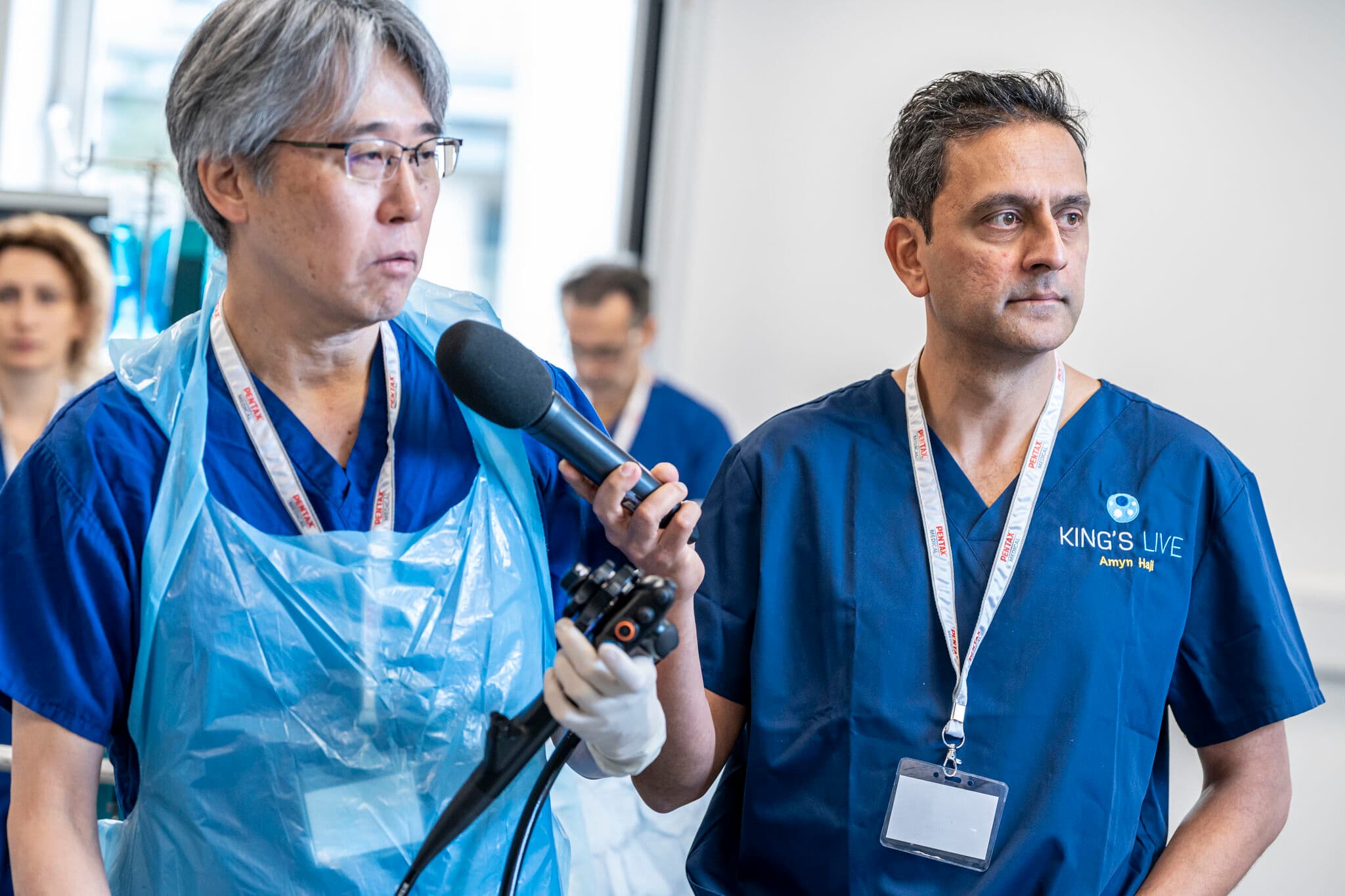
Mr Amyn Haji, Consultant Colorectal Surgeon & Interventional Endoscopist, King's College Hospital | CEO, Mentix
Few developments in gastrointestinal endoscopy have generated more enthusiasm over the past decade than artificial intelligence. The clinical rationale is compelling: colorectal cancer remains among the most prevalent and preventable cancers globally, colonoscopy is the primary detection tool, and missed adenomas during colonoscopy are a major contributor to interval cancers — tumours that develop between screening episodes. If AI can reduce the miss rate, the population-level impact could be significant.
The evidence has broadly borne this out. Multiple randomised controlled trials have demonstrated that computer-aided detection (CADe) systems significantly increase adenoma detection rates compared to conventional colonoscopy with white-light endoscopy. Real-time AI systems can identify suspicious lesions before human endoscopists do — in some studies, with a reaction time advantage of up to 1.8 seconds. For diminutive polyps in particular, AI-assisted characterisation tools are approaching the threshold required for a "diagnose and leave" strategy, which could reduce unnecessary polypectomy and the associated procedural burden on endoscopy services.
"Quality improvement in endoscopy (97%) and better endoscopic diagnosis (92%) were perceived as the most beneficial applications of AI to clinical practice. The most significant challenges were accountability for incorrect diagnoses (85%) and potential algorithmic bias (82%)." — Survey of UK gastroenterologists and endoscopists, BSG-endorsed, Frontline Gastroenterology 2022
The deskilling question
But a different concern is beginning to emerge in the literature, and it deserves serious attention. A 2025 observational study conducted across four Polish endoscopy centres found that continuous exposure to AI-assisted colonoscopy was associated with a measurable reduction in adenoma detection rates when those same endoscopists subsequently performed colonoscopy without AI assistance. In other words, regular use of AI may be subtly degrading the independent clinical judgement it was designed to support.
The mechanism is intuitive. Active visual search for suspicious lesions — the scanning behaviour that experienced endoscopists develop over thousands of procedures — appears to be partially suppressed when a detection system is running in the background. Eye-tracking data from separate studies has shown that endoscopists using CADe systems reduce their active visual travel distance, effectively outsourcing part of the diagnostic task to the algorithm. When the algorithm is removed, that delegated function does not immediately return.
More than five randomised trials show AI improves adenoma detection rate. AI has a 1.8 second reaction time advantage over human endoscopists in polyp detection. 92% of UK endoscopists see AI-aided diagnosis as a key benefit for their practice.
What this means for training
This is not an argument against AI in endoscopy. The clinical benefits of CADe are real, and for many patients — particularly those undergoing screening with non-expert endoscopists — AI assistance likely improves outcomes in a direct and meaningful way. A CADe study conducted at King's and Oslo University, published in NEJM Evidence, found that real-time AI-based optical diagnosis could help non-expert endoscopists distinguish neoplastic from non-neoplastic polyps with clinically meaningful accuracy — a finding with significant implications for extending quality endoscopy beyond specialist centres.
But the deskilling finding raises a genuine question about how AI tools are introduced and sustained within endoscopy training. If competence in independent visual assessment degrades with AI dependence, and if endoscopists spend an increasing proportion of their careers working alongside AI systems, then the baseline level of skill they bring to AI-assisted practice — and to situations where AI fails or is unavailable — will quietly decline.
The implication for surgical and endoscopy training programmes is significant. AI-assisted colonoscopy cannot simply be deployed and left to run. Maintaining the diagnostic skill that sits beneath AI-assisted practice requires structured, deliberate training that is specifically designed to develop and sustain independent visual competence — not just performance metrics in AI-assisted conditions.
This creates a new and somewhat paradoxical challenge: the better AI tools become, the more important it is to maintain robust mechanisms for developing and assessing the human expertise that underpins safe practice in their absence. Achieving that requires ongoing mentorship, structured case review, and the ability to observe and correct diagnostic behaviour in real time — precisely the kind of oversight that is difficult to sustain at scale within current training frameworks.
Mentix addresses this directly. By providing a platform for real-time remote proctoring and structured post-procedural review, Mentix enables experienced endoscopists to observe and guide trainees not just through technically challenging cases, but through the development of the independent clinical judgement that AI tools will increasingly depend upon. The goal is not to resist AI — it is to ensure the humans using it remain capable of doing so well.
AI is a remarkable addition to the endoscopy toolkit. It will improve outcomes for patients, reduce variability across practitioners, and — over time — extend high-quality screening to populations and settings that currently lack expert endoscopists. But it is a tool, not a trainer. Ensuring that the professionals deploying it are competent, continuously improving, and able to exercise independent clinical judgement remains the irreducible responsibility of surgical education. Meeting that responsibility at the scale the problem demands is the challenge that now faces every endoscopy training programme in the world.