
Why Advanced Surgical Techniques Aren't Spreading Fast Enough
The clinical case for ESD has never been stronger. So why do most Western centres still lack the expertise to offer it?
Mr Amyn Haji, Consultant Colorectal Surgeon & Interventional Endoscopist, King's College Hospital | CEO, Mentix
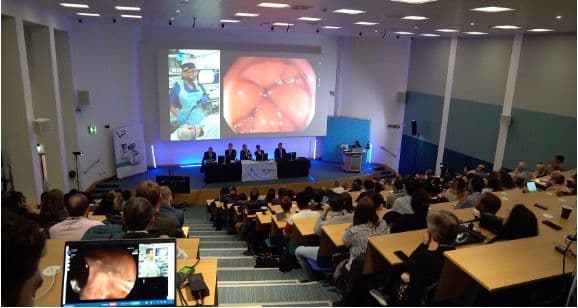
In 2010, I spent several months training with Professor Kudo at Showa University in Yokohama, learning a technique that had transformed colorectal cancer outcomes across Japan. Endoscopic submucosal dissection, or ESD, allows surgeons to remove large, complex polyps from the bowel wall — en bloc, in a single piece — without the need for open or laparoscopic surgery. The results from expert Japanese centres were remarkable: high rates of complete, curative resection, very low local recurrence, and the ability to preserve the organ entirely.
When I returned to King's College Hospital, I was determined to build a programme that could replicate those results in a Western NHS setting. What I encountered was a problem that had very little to do with the quality of the technique itself, and everything to do with how surgical expertise travels — or, more precisely, how it fails to.
The evidence is clear. The adoption isn't.
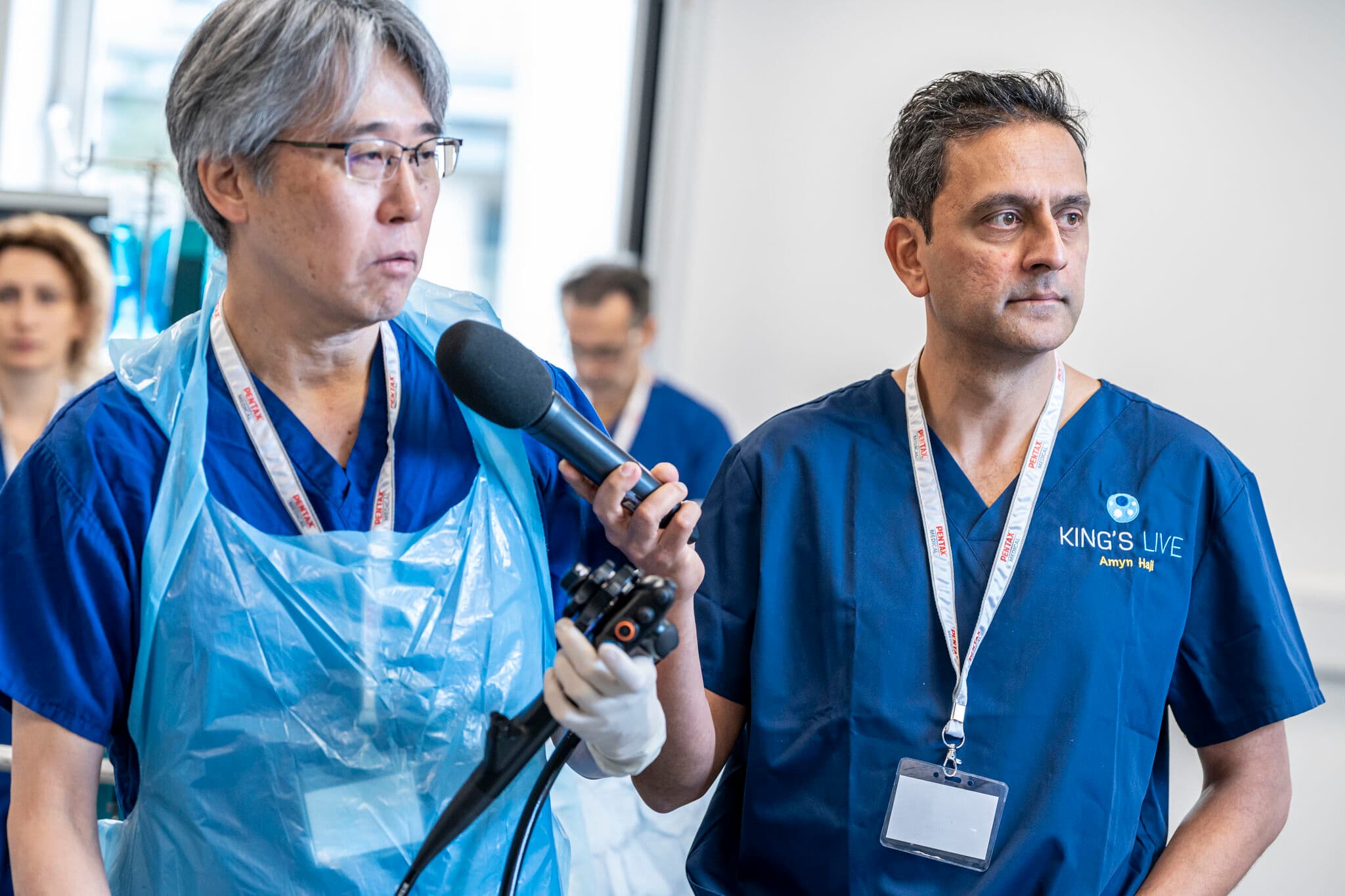
The clinical literature on colorectal ESD is now well-established. In series involving thousands of patients, ESD achieves high rates of en bloc resection and curative removal of lesions that would otherwise require surgical resection. It provides more accurate pathological diagnosis than piecemeal alternatives, and substantially reduces the need for major surgery in carefully selected patients. For lesions with significant submucosal fibrosis — common in Western referral practice, where patients often arrive after multiple failed resection attempts elsewhere — ESD is frequently the only organ-preserving option available.
"Early studies from Western centres raised concerns about high complication rates, and the impressive results from Japanese centres were not replicated. As a result, many Western endoscopists remain sceptical about the role of ESD, and few centres have incorporated the technique into their practice." — Emmanuel, Gulati, Haji et al., Clinical & Experimental Gastroenterology, 2017
The problem, in short, is the learning curve. ESD is technically demanding. The colorectum presents unique challenges — scope stability, thin colonic walls, and a higher risk of perforation than gastric or oesophageal ESD. Early in the learning curve, complication rates are significantly elevated, and the outcomes from inexperienced centres bear little resemblance to the benchmarks set in Japan. This creates a self-reinforcing cycle: poor early results fuel scepticism, scepticism reduces investment in training, and without training the expertise simply doesn't develop.
Training volume is the single most important variable
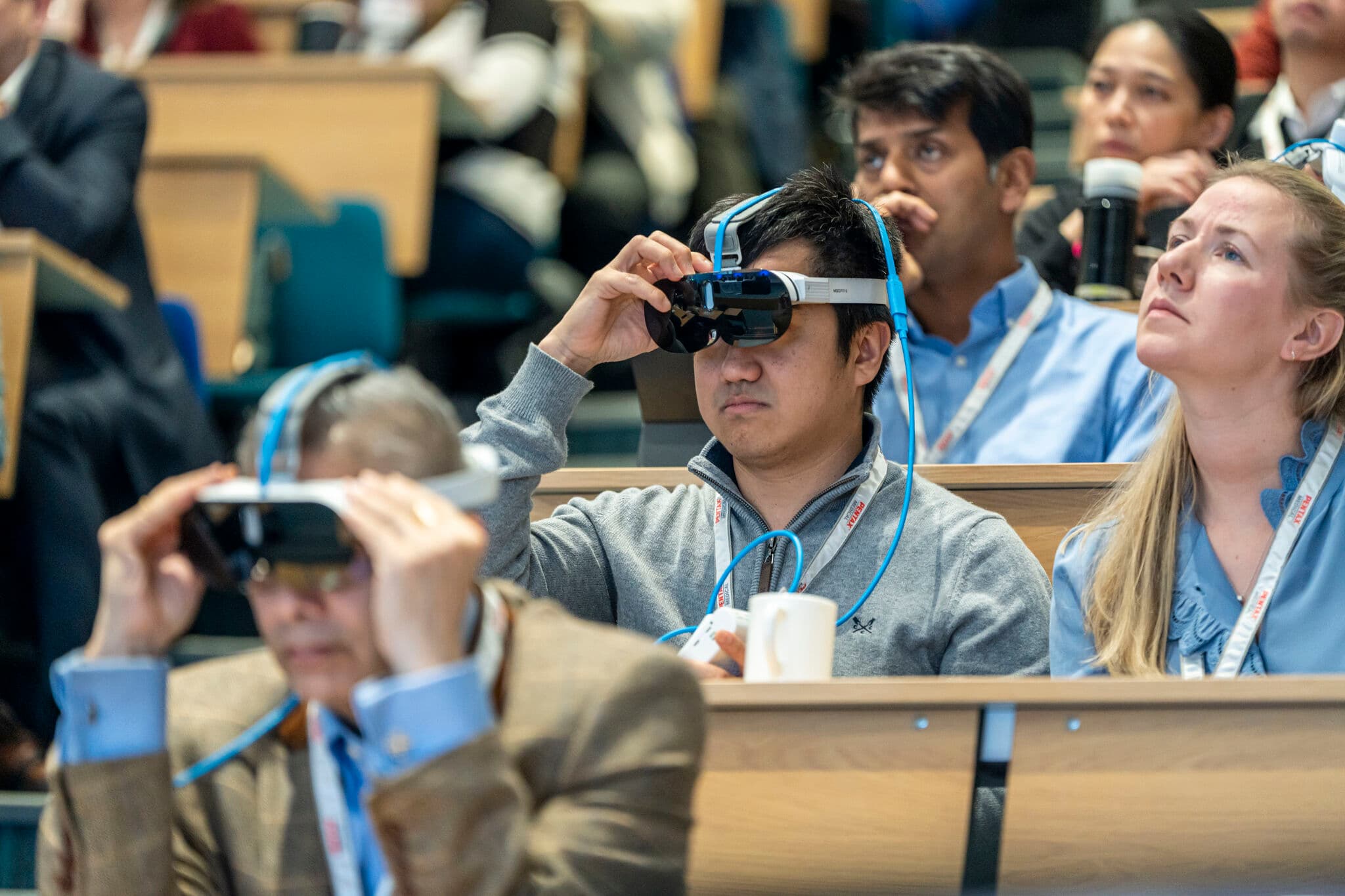
Our work at King's has demonstrated that high-volume ESD training for fellows is not only feasible but safe in Western centres — provided that the right structural conditions are in place. The key factors are not mystical: meticulous pre-procedural lesion assessment, a pragmatic and individualised approach to technique selection, rigorous outcome audit, and, critically, mentorship from an experienced endoscopist across the full length of the learning curve.
Target perforation and bleeding rates for accredited ESD centres are under 1%. The King's ESD and endoscopy programme has published over 54 research works. The ESD Western Alliance dataset now includes 13+ international centres.
That last point — mentorship — is where the system routinely breaks down. There are simply too few experienced ESD endoscopists in the world to train the number of practitioners that are needed. Traditional apprenticeship models require physical co-presence, which limits training capacity to whoever happens to be in the same hospital, in the same country, at the same time. A trainee in Riyadh or Nairobi cannot easily spend six months observing at King's. A surgeon in Doha who has completed a fellowship may struggle to find a proctor when they encounter a genuinely difficult case back home.
The result is a global distribution of surgical expertise that mirrors — and in some ways entrenches — existing inequalities in healthcare access. Advanced endoscopic techniques remain concentrated in a small number of academic centres in Japan, Western Europe, and North America. Outside those hubs, patients who would benefit from organ-preserving endoscopic resection are, in practice, referred for major surgery instead.
What a structural solution looks like
Solving this problem requires more than encouraging more trainees to apply for fellowships at expert centres — though that remains valuable. It requires building infrastructure that allows expertise to be shared across distance, at scale, without the safety compromises that come from removing experienced oversight from the learning curve.
That means real-time remote proctoring: the ability for an experienced endoscopist to observe, guide, and intervene during live procedures from a different location. It means structured post-procedural review and feedback. It means a platform that connects accrediting bodies, device manufacturers, and training institutions into a coherent ecosystem rather than a fragmented set of one-off relationships.
This is the problem Mentix was built to address. By enabling real-time remote proctoring of advanced endoscopic and surgical procedures, Mentix extends the reach of expert mentorship beyond the walls of any single institution — connecting trainees in underserved markets with consultant-level expertise, and giving experienced surgeons a platform to scale their clinical impact globally.
See this mentorship model in practice on Mentix TV.
The clinical case for ESD has been made. The evidence for high-volume training in Western centres exists. What is missing is not more data — it is the infrastructure to act on what we already know. The patients exist. The expertise exists. The gap between them is an organisational and logistical problem, and it is one that technology is now in a position to close.