
The Surgical Training Gap No One Talks About
How a 130-year-old apprenticeship model is failing modern medicine—and what Mentix is building to fix it
Dr. Amyn Haji, Founder of Mentix · Ollie Graham-Yooll, The Utopia Studio Co-Builder · Karan Pinto, The Utopia Studio Co-Builder
We have more surgical techniques than ever before. More specialized procedures. More demand for surgery from aging populations worldwide. Yet the system that trains the humans who perform these procedures hasn't fundamentally changed since William Halsted formalized surgical residency at Johns Hopkins in the 1890s.
The numbers tell a stark story. By 2050, the United States alone faces a projected shortage of over 25,000 general surgeons. Globally, five billion people lack access to safe, affordable surgical care—not primarily because of missing equipment or facilities, but because there aren't enough trained surgeons to staff them. The bottleneck is human.
And the crisis isn't about producing more surgical graduates. It's about a training model designed for a world that no longer exists, colliding with the realities of modern medicine.
The Halstedian Hangover
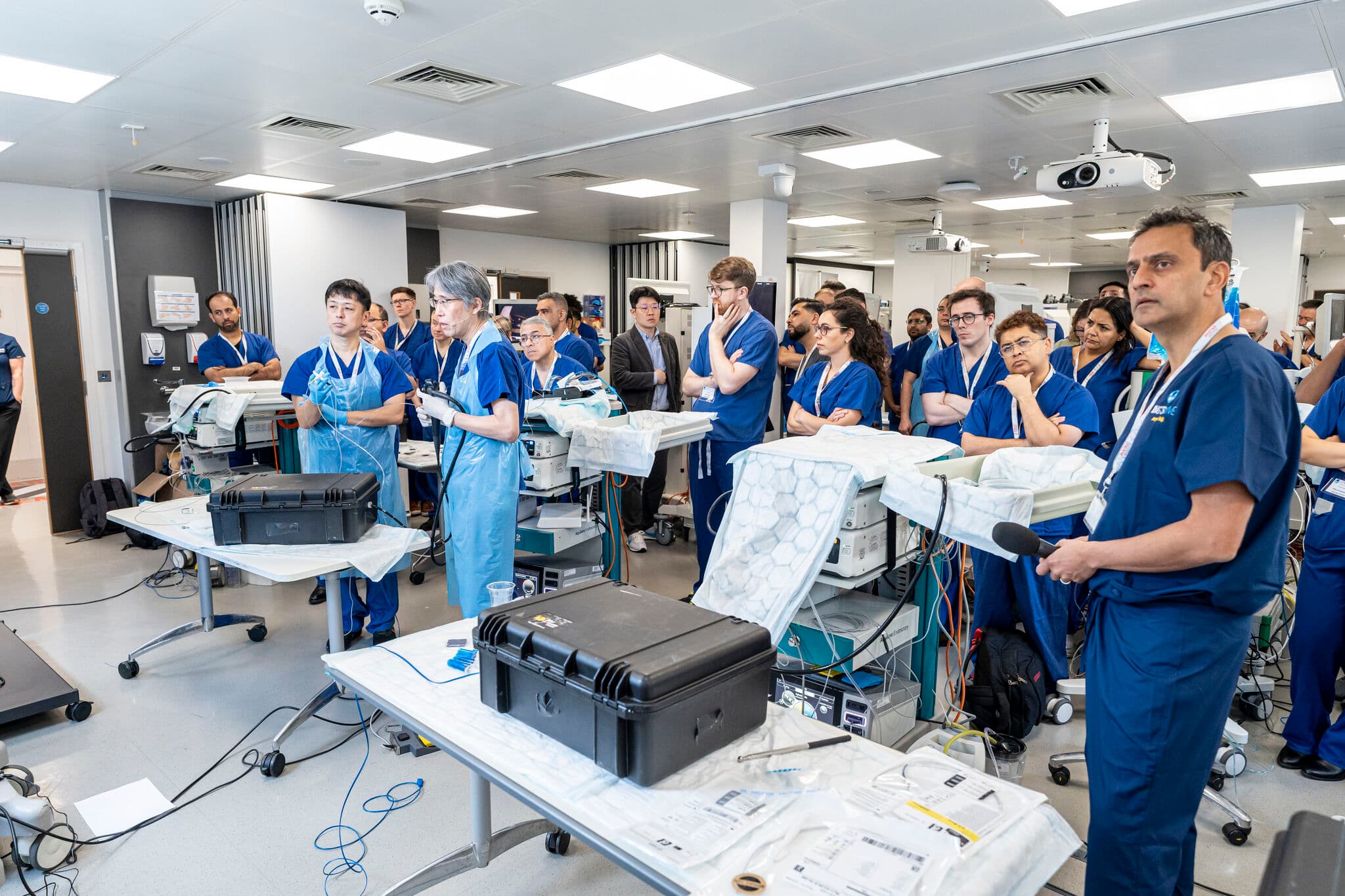
Surgical training was built on apprenticeship. "See one, do one, teach one" became the mantra—a resident would observe a procedure, perform it under supervision, then teach it to the next generation. This model assumed something that was true for most of the twentieth century: trainees would spend enormous amounts of time in the operating room, working alongside experienced surgeons who knew them well enough to gradually hand over autonomy.
That world has disappeared.
European surgical trainees now work a maximum of 48 hours per week. In the United States, the cap is 80 hours—down from the 100+ hour weeks that previous generations endured. The curriculum hasn't shrunk to match. Same procedures to learn, dramatically less time to learn them.
Subspecialization has fragmented the mentor pool. Seventy-five to eighty percent of new general surgery graduates now pursue fellowship training in narrower fields—trauma surgery, surgical oncology, minimally invasive surgery. The broad generalist who could teach across the full scope of operative care has become an endangered species. A trainee rotating through a service may never encounter the same attending surgeon often enough to build the relationship that enables real teaching.
This matters because surgical skill transfer depends on trust. An attending surgeon won't hand progressively more responsibility to a resident they barely know. The educational literature calls this the "autonomy crisis"—residents completing training without the operative experience and independence required to practice confidently. Shortened rotations, service pressures, and the sheer volume of trainees competing for OR time mean the deep mentor-mentee relationships that defined surgical education have become increasingly rare.
Meanwhile, expertise concentrates geographically. The best surgeons cluster at tertiary academic centers in wealthy cities. A trainee at a rural hospital in Kansas or a teaching institution in Lagos faces the same fundamental problem: the mentor who could accelerate their learning isn't there.
COVID made all of this worse. A global survey of surgical trainees found that the pandemic created "major disruption in all aspects of training," with hands-on courses and conferences hit hardest. When researchers asked what would help recovery, mentorship by senior surgeons ranked near the top—but the same structural barriers that existed before the pandemic remained. The system had no mechanism to deliver mentorship at scale.
The Telementoring Paradox
Remote surgical guidance isn't a new idea. In 1965, Michael DeBakey transmitted guidance on an open heart surgery from the United States to surgeons in Europe via satellite. Since then, decades of research have validated the concept. A systematic review of 66 studies found that 58 percent showed no difference in outcomes between telementoring and in-person supervision. No study found telementoring resulted in poorer postoperative outcomes. The technology works.
So why, sixty years later, does surgical training still depend almost entirely on physical proximity?
The answer lies in what telementoring studies validated versus what the real world requires. Research demonstrated that a surgeon in one location can guide a procedure happening somewhere else. It didn't solve the harder problems: How does a trainee find the right mentor for their specific learning need? How does that relationship persist beyond a single procedure? How does feedback get structured, tracked, and verified? How do institutions trust that remote training meets their standards?
Existing tools are fragmented. Video conferencing platforms weren't designed for surgical workflows. Recording systems capture procedures but don't integrate with feedback mechanisms. Proctoring happens ad hoc, arranged through personal networks rather than systematic matching. There's no audit trail, no credentialing pathway, no standardized assessment that travels with a trainee from one stage of their career to the next.
The surgical world has accumulated impressive hardware—robotic systems, augmented reality headsets, cameras that can stream in 4K from inside a patient's abdomen. What it lacks is an operating system. A layer that connects the trainee who needs guidance with the expert who can provide it, captures the learning that happens, and creates accountability across the entire competency journey.
The Mentix Thesis
This is the gap Mentix was built to fill.
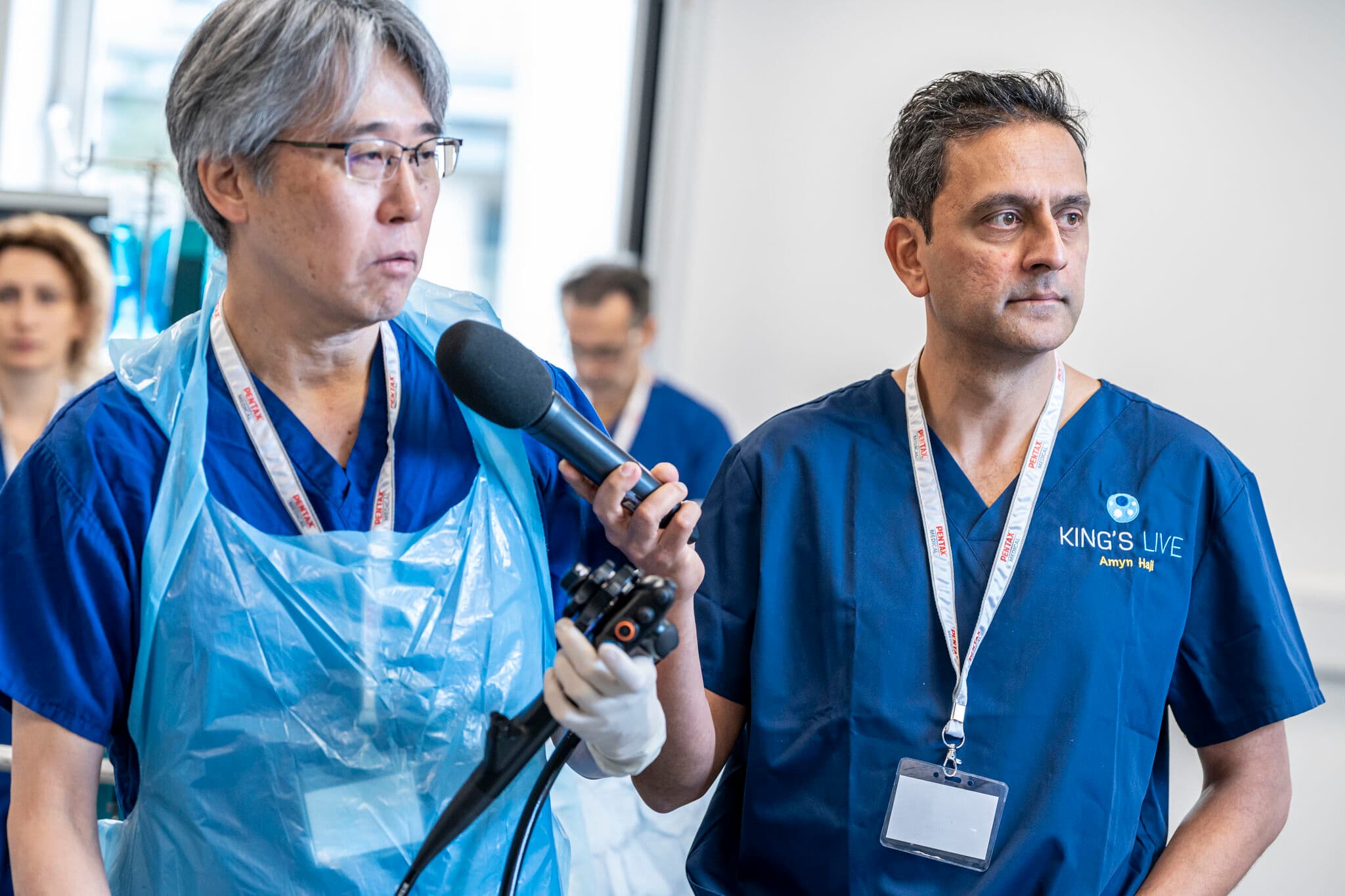
The platform connects trainee surgeons with leading experts for live case guidance, structured feedback, and secure global skills training. Not one-off consultations, but longitudinal relationships. Not informal advice, but documented competency development.
The founding insight came from Dr. Amyn Haji, a colorectal surgeon and surgical educator who spent years watching talented trainees struggle to access the mentorship that would accelerate their development. The problem wasn't motivation or ability. It was infrastructure. The expert who could teach a specific technique existed somewhere in the world—but there was no reliable way to connect trainee to mentor, no framework to structure the learning, no system to verify what had been taught.
Mentix starts with procedures where remote guidance has the strongest evidence base: laparoscopy, endoscopy, and minimally invasive techniques where visualization already happens through cameras rather than direct line of sight. The platform enables an experienced surgeon to watch a procedure in real time, communicate with the operating surgeon, and provide the kind of moment-by-moment guidance that typically requires physical presence in the OR.
But the deeper play is what happens around the live guidance. Structured feedback forms capture what was taught. Competency tracking follows a trainee across procedures and mentors. Assessment data accumulates into a portable record of skill development. For the first time, a surgical trainee can demonstrate not just that they completed a rotation, but what they actually learned and from whom.
This creates value in multiple directions. Trainees get access to world-class expertise regardless of where they're physically located. Expert surgeons can teach globally without leaving their institutions—monetizing knowledge and extending impact in ways that weren't previously possible. Training programs gain visibility into competency development that was historically opaque.
The Device Company Wedge
Every new surgical device requires training. When a company like Creo Medical introduces an advanced energy platform or a novel endoscopic tool, surgeons need to learn how to use it safely and effectively. Historically, this meant flying expert proctors to hospitals around the world—an expensive, unscalable proposition that created bottlenecks in adoption.
Mentix offers a different model. Remote proctoring through the platform lets device manufacturers train surgeons globally without the logistics of constant travel. The expert demonstrates technique, watches the trainee perform, provides real-time correction—all the elements of effective proctoring, delivered over secure video with appropriate documentation.
This isn't theoretical. Mentix has already established trial agreements with device companies seeking scalable training infrastructure. The economics are compelling: faster surgeon onboarding means faster device adoption means faster revenue recognition. For manufacturers, Mentix becomes the embedded training layer for their entire product portfolio.
The strategic value extends beyond cost savings. Regulatory pressure for documented competency is increasing. European medical device regulations increasingly require evidence that surgeons using new technologies have been appropriately trained. A platform that captures this training systematically—with timestamps, assessment data, and credential verification—solves a compliance problem that device companies currently manage with spreadsheets and emails.
The Global South Imperative
The surgical workforce crisis hits hardest where healthcare systems are already stretched thin. Sub-Saharan Africa has roughly 0.53 surgeons per 100,000 population—a fraction of what's needed for basic coverage. The World Federation of Societies of Anaesthesiologists estimates that over 136,000 physician anesthesia providers would need to be trained globally just to reach a minimal density threshold.
These regions have training programs. They have motivated trainees. What they lack, disproportionately, is access to experienced mentors who can guide them through the learning curve.
Traditional solutions have struggled with dynamics that aren't purely technical. Short-term surgical missions from high-income countries—sometimes called "voluntourism"—can undermine local expertise and create dependency rather than building sustainable capacity. What's needed is bilateral partnership: structured relationships where expertise flows across borders without displacing the surgeons who will ultimately serve these populations.
Mentix's model addresses this directly. A trainee in Nairobi can access mentorship from a specialist in London without either party relocating. The mentor relationship persists across months and years, building the kind of longitudinal development that one-off training trips cannot provide. The platform enables same-gender mentorship matching—data shows women and underrepresented minorities benefit most from mentors who share their background, but finding such mentors locally may be impossible.
Qatar's positioning as Mentix's base matters here. Neutral ground between established medical centers and emerging healthcare markets. Increasingly a crossroads for health technology investment. Well-resourced enough to support the infrastructure that global surgical training requires, without the complicated dynamics of colonial-era medical relationships.
Building the Moat
Platform businesses in healthcare face a consistent challenge: what prevents a well-resourced competitor from replicating the model? For Mentix, defensibility emerges from several reinforcing dynamics.
Network effects compound over time. More mentors on the platform attract more trainees, which generates more procedures logged, which produces better matching algorithms, which attracts more mentors. The data generated by each interaction—what was taught, how it was assessed, what outcomes resulted—creates proprietary competency benchmarks that no newcomer can replicate without years of accumulated history.
Device manufacturer relationships create lock-in on the supply side. Once a company has standardized its proctoring on Mentix, switching means retraining proctors, migrating compliance documentation, and disrupting established workflows. The same logic applies to hospital systems that build competency tracking into their residency programs.
Perhaps most importantly, whoever establishes credentialing standards for remote surgical training first sets the rules that others must follow. Regulatory bodies looking for documented evidence of competency will defer to whatever framework exists. Mentix is building that framework—not just a platform for connecting mentors and trainees, but a system for verifying what surgical education actually accomplished.
The Path Forward
Surgical mentorship has been locked in a 130-year-old model not because no one wanted to change it, but because the technological and institutional pieces weren't in place. Reliable high-bandwidth video to operating rooms worldwide. Acceptance of remote training models, accelerated by COVID. Device manufacturers actively seeking scalable proctoring solutions. Regulatory frameworks that increasingly require documented competency.
Those pieces are now in place.
For surgeons, the implication is that training quality no longer needs to depend on the accident of geography—which hospital you matched at, which attendings happened to be on service during your rotations. Access to expertise can be systematic rather than serendipitous.
For device companies, the opportunity is to accelerate adoption without the cost and complexity of deploying proctors globally. Every week that a surgeon waits for training is a week of delayed revenue and a patient who might benefit from a new technology but can't access it.
For healthcare systems facing surgeon shortages, the math is clear: you cannot hire your way out of this problem. There will not be enough surgeons. The only solution is multiplying the impact of every expert you already have—letting one experienced surgeon mentor ten trainees across three continents instead of teaching whoever happens to be in the same operating room.
Mentix is building the infrastructure for that world. A world where a trainee in any hospital can learn from the best surgeon for that specific procedure, live, securely, with structured feedback that accumulates into verified competency.
That's not incremental improvement to surgical education. That's the foundation for how the next generation of surgeons will be trained.